Extreme Universe: Multiple Star Systems and Mysterious Objects
Overview
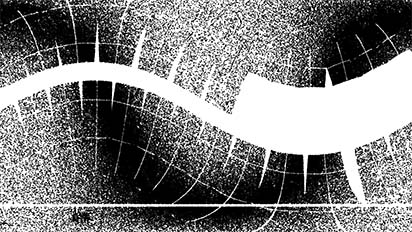
NASA’s Transiting Exoplanet Survey Satellite (TESS) mission has given scientists an unprecented optical view of the universe. By staring at the same sector of the sky for 28 days—looking at the brightest stars at a two-minute cadence—TESS allows us to gather a history of the optical behavior of any star that is bright enough to provide a sufficent signal. The changing optical behavior of stars over time, commonly known as “light curves,” can provide additional information on the observed stellar system types. For example, the decrease in emitted light detected from the system when one star passes in front of another—relative to our perspective on Earth—can reveal an eclipsing binary type of star system.
This project used hundreds of CPU-years and tens of GPU-years. These numbers grow nearly every day as we explore more of the rich Transiting Exoplanet Survey Satellite (TESS) observational data.
Project Details
We used the NASA Center for Climate Simulation (NCCS) Discover supercomputer to build over 100 million light curves from unprocessed TESS optical data. The NCCS ADAPT Science Cloud’s GPU cluster was then used to train a convolutional neural network to identify eclipse features in the light curves. Using the neural network, the system identified over 460,000 eclipsing binary system candidates. In a visual review of the neural network outputs, we found several systems of significant scientific interest.
Results and Impact

Using these methods with TESS data and dozens of follow-up observations from several different astronomical observatories, we discovered many new triple and quadruple star systems and the first known sextuple star system, which consists of three sets of two eclipsing binary stars, all six stars gravitationally bound to each other in their orbits (see Related Links for more details). The discovery of one quadruple star was recently published in a peer-reviewed astrophysics journal, and several additional discoveries are currently pending publication.
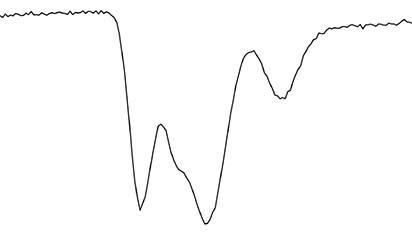
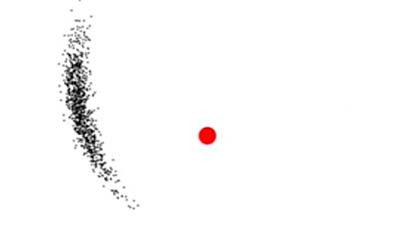
An earlier version of the neural network identified several stellar systems that have highly irregular eclipses, one of which is designated a “mysterious object” because it has not yet been characterized. This unknown object may prove to be a disintegrating planet or an asteroid experiencing collisions with other large objects. The light curve dataset as a whole is likely to inspire substantial interest in the independent exploration of the inherent statistical relationships and cross-referencing that with other observations and astrophysical data.
Why HPC Matters
This project used hundreds of CPU-years and tens of GPU-years. These numbers grow nearly every day as we explore more of the rich TESS observational data. This research project was greatly accelerated by the use of NCCS high-end computing resources and staff support. It simply could not have been accompished—certainly not in this time frame—without those key NCCS resources.
What's Next

This project continues to expand. Individual discoveries merit attention and study on their own, while other interests beyond eclipsing stars will be explored. Neural networks can be trained to identify any feature in the light curves, so the NCCS GPU cluster will continue to provide the means for discovery in the TESS data. Similar methods could be beneficial for exploring X-ray and gamma ray data from NASA space observatories.
More Information
- TIC 168789840: A Sextuply Eclipsing Sextuple Star System
- Six Stars, Six Eclipses: ‘The Fact That It Exists Blows My Mind’, The New York Times
- Discovery Alert: First Six-star System Where All Six Stars Undergo Eclipses
- TIC 454140642: A Compact, Coplanar, Quadruple-lined Quadruple Star System Consisting of Two Eclipsing Binaries
- Mysterious Dust-emitting Object Orbiting TIC 400799224 (preprint)
Researchers
- Brian P. Powell, NASA Goddard Space Flight Center Please enable Javascript to see email address.
- Veselin Kostov, NASA Goddard Space Flight Center Please enable Javascript to see email address.