2020 NASA High-End Computing Needs Assessment Report
Overview
Dating back to 1987, NASA’s use of High-End Computing (HEC) resources has been a major factor in the effectiveness and execution of NASA missions. Our understanding of the complex interactions of natural and human-induced phenomena is enhanced by sophisticated, data-driven models that can process instrument output into usable data products. As NASA’s observing strategies evolve to collect larger volumes of data, algorithms are becoming more complex, resulting in the fusion of multiple, interdisciplinary data sources all requiring even greater HEC capabilities.
Project Details
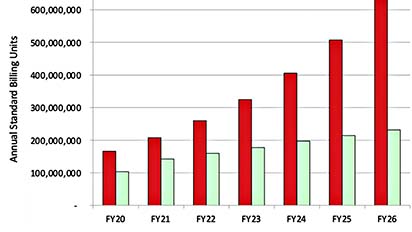
In June 2020, the NASA HEC Program held a workshop to discuss how researchers currently use HEC resources and how they expect to use them in the future. Over 250 researchers across multiple programs presented use cases and discussed future requirements, yielding a greater understanding of how the projects fit into the larger NASA mission. The data gathered in the workshop served as the foundation for the HEC Needs Assessment Report, which provides an overall analysis of the HEC Program’s major uses and areas of growth.
As NASA’s observing strategies evolve to collect larger volumes of data, algorithms are becoming more complex, resulting in the fusion of multiple, interdisciplinary data sources all requiring even greater HEC capabilities.
Results and Impact
Supercomputing systems enable accurate simulations of non-linear, non-equilibrium processes to produce high-fidelity model outputs needed across a wide range of NASA missions. HEC systems are essential to running models at sufficient resolution to accurately predict the behavior of these processes. The HEC Program supports a wide variety of applications, including physics-based models, large-scale data analytics, machine learning, uncertainty quantification, system engineering, mission planning, and much more.
NASA HEC users stated that they consumed all the resources allocated to them and used extra resources whenever available. Beyond the need for more processing speed and a greater volume of resources, future needs identified include:
- Stable funding streams for code evolution and modernization
- Improved data access
- Expanded support by supercomputing experts to domain experts
- Increased availability of new architectures, such as accelerator-based systems
- Polices to enable widespread external collaboration
- Usage metrics based on science requirements, not solely on processor usage
Users also identified the need to use emerging exascale architectures, which would also require support for codes that can port to future capabilities; leveraging portable code design; refactoring; code modernization; and the implementation of software engineering best practices. One way to accomplish this move to exascale is to leverage systems deployed by other government agencies who own larger-scale resources than NASA. However, the process to obtain access to these systems would need to be streamlined.
In addition to traditional science and engineering requirements, there is a growing need for multi-point analysis and uncertainty quantification in order to reduce mission risks, plan missions that require atmospheric reentry, and fully realize the reuse of facility codes without stable funding. While the current HEC Program structure has the capacity to address some of these needs, the current funding profile remains inadequate to address all the issues and requirements identified by the user community during the HEC workshop.
Why HPC Matters
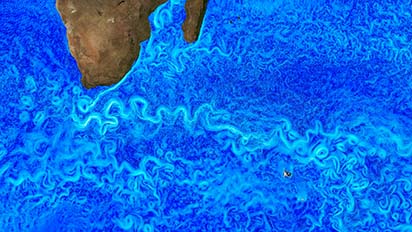
There are three primary ways in which the HEC Program supports these missions: discovery and use of new knowledge; support for managing complex and pathfinding programs; and creation of an inspirational work environment. Using HEC resources allows missions to reduce risk and cost, quantify uncertainty, improve mission planning and design, and accelerate mission schedules. By working with HEC resources on meaningful problems at the very edges of science, engineering, and computing, we improve the NASA workforce by attracting and retaining those most energized and inspired by NASA missions.
What's Next
Phase 2 will focus on optimizing GPU utilization. Specifically, we will 1) compare application performance on different platforms by adjusting hyperparameters such as training dataset size; 2) introduce to the testbed more Earth science applications using varied types of AI models such as graph neural networks; 3) implement and test different parallel strategies, such as model parallelism and pipeline parallelism; and 4) produce a comprehensive report to introduce the lessons learned in the testing process for benefiting the Earth science community.
More Information
- NCCS collaborates with the NSF Spatiotemporal Innovation Center at George Mason University
- Cloud Classification Application
- Daytime Rainy Cloud Detection and Convective Precipitation Delineation Based on a Deep Neural Network Method Using GOES-16 ABI Images
- Source code
- Satellite2Map Application
- PM2.5 Retrieval Application
- ArcCI Application
- Tweet classification application
Researchers
- Michael Little, NASA Goddard Space Flight Center Please enable Javascript to see email address.
- Daniel Duffy, NASA Goddard Space Flight Center Please enable Javascript to see email address.
- Tsengdar Lee, NASA Headquarters Please enable Javascript to see email address.
- Piyush Mehrotra, NASA Ames Research Center Please enable Javascript to see email address.