Seeking Earth’s Closest Cousins: TESS’s All-Sky Survey
Overview
Are we alone? Are there planets orbiting other stars? Has life arisen on any of them? People pondered these questions for millennia until 1995 when the first exoplanet orbiting a Sun-like star was discovered. While that exoplanet, 51 Peg b, is a “hot Jupiter”—a gas giant closely orbiting its star—most of the more than 4,200 exoplanets discovered since then are smaller than Neptune and, like Earth, are often in multi-planet systems. NASA’s Kepler Mission, which identified over 2,800 planets, taught us that on average, every star has at least one planet.
To capitalize on the ubiquity of small exoplanets, NASA launched the Transiting Exoplanet Survey Satellite (TESS) in April 2018 to conduct a near-all sky survey for planets orbiting stars typically ten times closer and 100 times brighter than Kepler’s targets. We can measure the masses of many of these small planets, establish their bulk densities, and constrain their composition. Eventually we will be able to characterize their atmospheres, using the upcoming James Webb Space Telescope and other large telescope missions. Ultimately, we hope to detect chemicals in their atmospheres—such as oxygen, carbon dioxide, water vapor, and methane—that may indicate life is present.
"TESS mapped approximately 75% of the sky over its two-year primary mission—taking 20,000 images of selected target stars every two minutes. Due to the sheer amount of data it collects and the complexity of the planet search pipeline, TESS could not succeed without NASA’s high-performance computing resources."
Project Details
TESS mapped approximately 75% of the sky over its two-year primary mission. Each month, TESS observes a 24‑by‑96‑degree swath of sky, taking a 64-gigabyte Full Frame Image (FFI) every half hour and 20,000 images of selected target stars every two minutes. The Science Processing Operations Center (SPOC) processes the data on the Pleiades supercomputer at the NASA Advanced Supercomputing (NAS) facility to calibrate the digital images, measure the brightness of each two-minute target star over time, correct instrumental effects, and search for the tell-tale “dips” in the light curve that occur when a planet crosses the face of its star. These transits are small and difficult to identify against observation noise and stellar variability.
Results and Impact
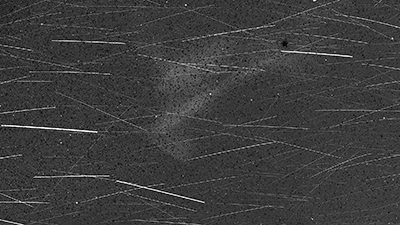
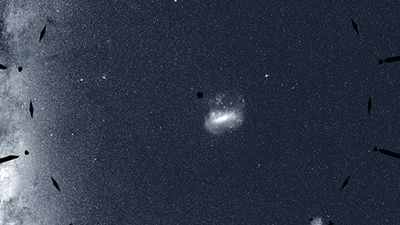
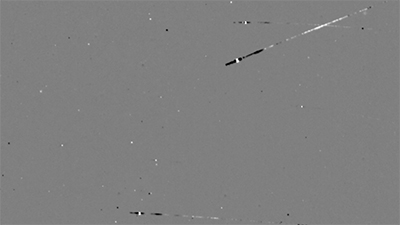
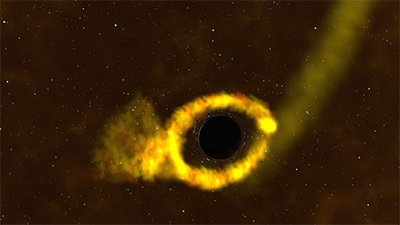
TESS has discovered 79 planets to date, 39 of which are smaller than Neptune, and over 2,000 planet candidates. The systems are diverse, including TESS’s first Earth-size planet in the habitable zone of a cool, red dwarf star, TOI 700 d. One giant planet candidate, WD 1856 b, was discovered orbiting a white dwarf; this planet survived its star becoming a red giant that engulfed its other planets then shrank to a small, white dwarf—seven times smaller than the planet candidate still in orbit around it. TESS has also opened up other areas of astrophysics: it caught over 60 supernovae in its first year, as well as observing the death throes of a star ripped apart by a black hole.
Over 120 terabytes (TB) of TESS data were downloaded by the astronomical community in October 2018, breaking all records at the Mikulski Archive for Space Telescopes, where all of the processed TESS datasets are stored and provided to the public. The pace of the science coming from TESS is astonishing: the rate at which scientific papers based on TESS data are published rivals that of the Kepler and Hubble space telescopes. Thirty-nine TESS-related science papers were submitted for review or published in May 2020 alone!
Why HPC Matters
TESS could not succeed without NASA high-performance computing (HPC) resources. The SPOC’s dedicated computer hardware is collocated with Pleiades in the NAS facility to minimize data transfer time. Each month of data takes 5–7 days to process and uses up to several thousand cores at a time. The SPOC produced approximately 40 TB of data products during its primary mission and will generate about twice as much data during its two-year extended mission. The enormous computational power provided by NAS systems is a key enabling technology for TESS.
What's Next
TESS began its extended mission July 5, 2020, collecting FFIs every 10 minutes. TESS also collects 20-second postage stamp images of up to 400 target stars, permitting the exploration of astrophysical phenomena such as pulsating white dwarfs, flare stars, and other variable stars with unprecedented temporal resolution. With plenty of hydrazine fuel and a stable orbit, TESS will be unveiling the mysteries of the heavens for many years to come.
Related Link
Jon Jenkins, NASA Ames Research Centerjon.jenkins@nasa.gov