
To Better Understand Climate Effects of Mega-Eruptions, Just Add Water
Overview
Satellite observations of 1991's Pinatubo volcanic mega-eruption in the Philippines and climate model simulations of the past thousand years show such mega-eruptions being followed by long cold spells that can dramatically reduce global temperatures. However, after the Coupled Model Intercomparison Project Phase 5 (CMIP5) international study of climate model performance, completed in 2012, it became widely recognized that proxy measurements of past climate (e.g., tree rings and polar ice cores thousands of years old) do not reveal as drastic, worldwide cooling as did the climate models.
A recent NASA study has revealed that to more accurately model the climate effects of a volcanic eruption—especially mega-eruptions many times larger than anything in recent history—scientists need to include the effects of erupted water vapor in the stratosphere, in addition to the atmospheric effects of sulfur compounds that have previously been the primary focus. Computations like these were previously infeasible, but the recent availability of more powerful supercomputer resources has enabled scientists to more fully represent their understanding of volcanic emissions' chemistry-climate interactions in computer simulations of Earth's climate.
Project Details
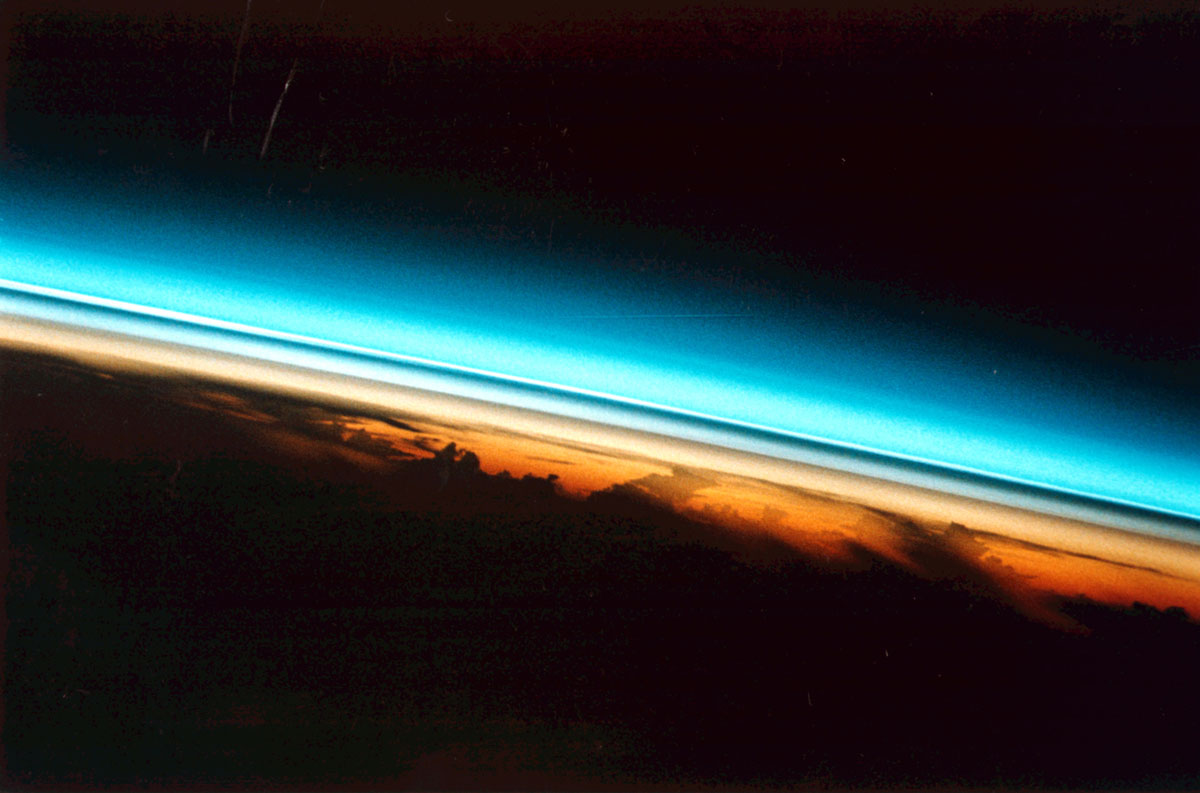
Scientists at the NASA Goddard Institute for Space Studies (GISS) ran initial tests, tracking both sulfur and water, using the GISS ModelE climate model coupled with gas-phase chemistry and the MATRIX aerosol microphysical module, a more complete aerosol representation than what GISS used for CMIP5. Simulations included a Pinatubo-sized eruption (injections of ~18 trillion grams of sulfur dioxide and 150 trillion grams of water) and a Samalas-sized eruption (10 times larger, circa 1257 in modern-day Indonesia).
Results and Impact
GISS's simulations including the effects of stratospheric water vapor produced more realistic results and showed that the changes in gas-phase chemistry included in "wet" volcanic eruptions have global-scale implications.
For the Samalas-sized simulation, the climate model's subsequent global cooling went down by about a factor of three compared to simulations that did not include water and was more in line with climate impacts inferred from ice cores.
In simulations that include effects of stratospheric water vapor, the plume's sulfur dioxide gas converted more rapidly to sulfate aerosols, which then grew more quickly to larger sizes—important because larger particles cause more warming than cooling.
Why HPC Matters

For this initial testing, the GISS team ran millions of core hours of simulations on the NASA Center for Climate Simulation (NCCS) Discover supercomputer. Discover's capacity has more than tripled to nearly 3.5 petaflops since GISS's CMIP5 simulations, and this larger capacity makes feasible the climate simulations using the more realistic, and more computationally intensive, MATRIX aerosol microphysics modules.
What's Next
GISS scientists are continuing to make more realistic simulations of volcanic eruptions' climate effects by including a broadening chemical representation of volcanic plumes, and thereby investigating the importance of additional constituents such as ash and halogens. These studies demonstrate that to better understand the effects of volcanic injections in the atmosphere, it is essential to couple gas-phase chemistry with more representative aerosol microphysics in climate models, so that the climate impact of massive events, and their evolution in space and time, can be quantified.
Ellen Salmon, NASA Goddard Space Flight Centerellen.salmon@nasa.gov Allegra LeGrande, NASA Goddard Institute for Space Studies
allegra.n.legrande@nasa.gov