
HECC – Moving to the Future, Today
Overview
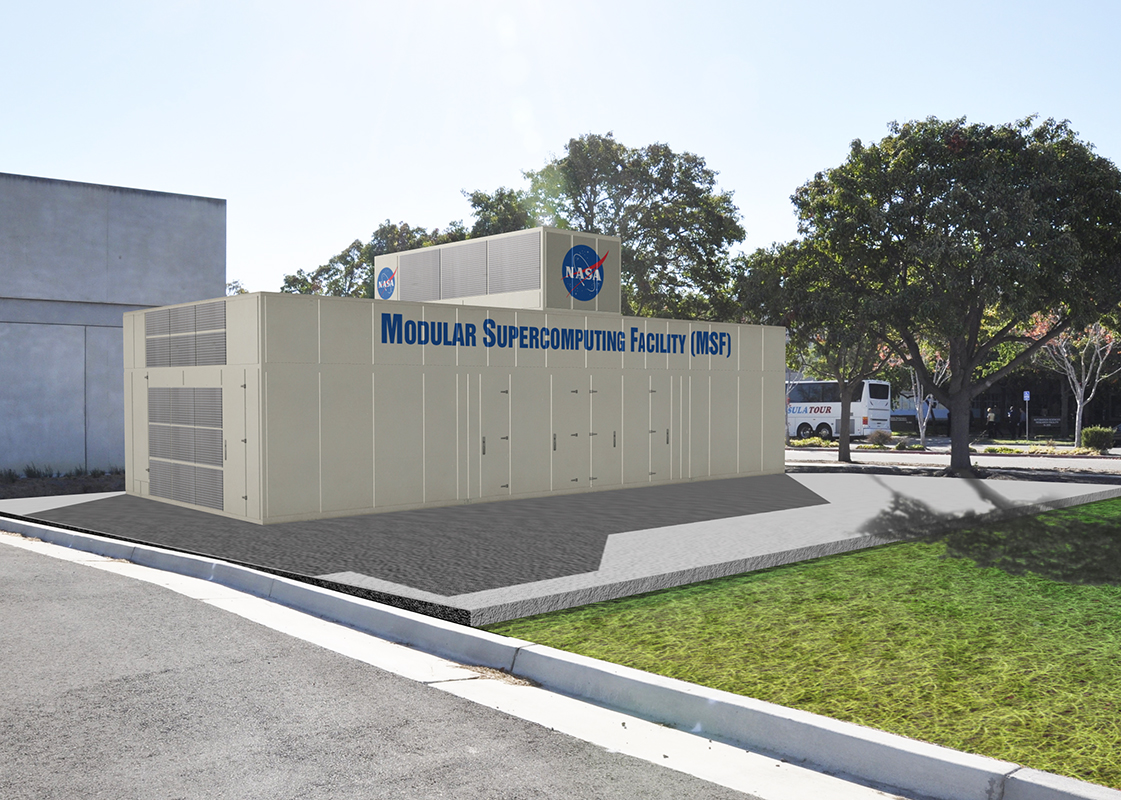
NASA's High-End Computing Capability (HECC) Project provides an agency-wide compute environment focused on enabling science and engineering discovery across all technical mission directorates. Meeting that challenge requires an environment that is reliable, stable, and expandable. This year we were able to significantly expand storage capacity and increase the computing power of NASA's primary supercomputer, Pleiades, but HECC expansion is currently limited by power and cooling constraints. As part of a study by NASA to evaluate multiple approaches to expansion, we will assess performance of a prototype modular supercomputing facility (MSF) over one year of operation.
Project Details
HECC meets NASA's competing HPC demands—capacity, capability, and time-critical computing—through a customer-focused team of professionals providing world-class services and hardware to a broad array of technical users. The primary goal of the HECC team is to enable our users to accomplish their mission goals.
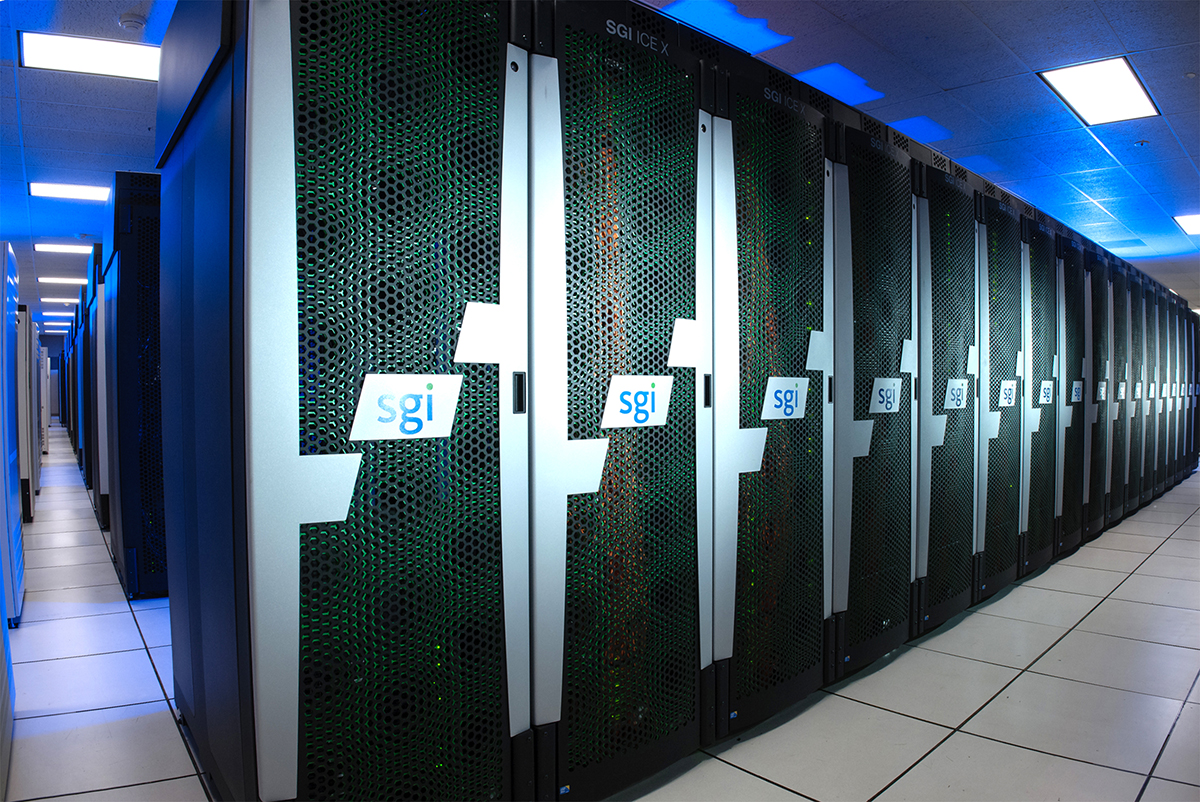
This year we nearly doubled HECC's online Lustre storage capacity from 20 to 38 petabytes, upgraded the archive system to the next-generation LTO-6 tape technology, and increased Pleiades' peak performance to 5.3 petaflops.
Maintaining a healthy growth profile became challenging as we hit the power and cooling limits of our existing facility. To address these limitations, both the agency and the HECC team at NASA's Ames Research Center began a process to determine the best path forward, and HECC procured an MSF to aid in the evaluation of a new approach to fielding high-performance computers.
The team remains driven to provide the best high-end computing environment to our user community through advances in hardware and improved service delivery.
Results and Impact
With the installation of its first Haswell racks in late 2014, Pleiades now features its 6th generation of Intel Xeon architecture. The system has been able to advance through six different processor technologies and numerous network interfaces while simultaneously delivering the equivalent of over 500 million Westmere node hours. Overall, the HECC project has had a very successful year.
- Pleiades was ranked 11th worldwide in the June TOP500 list and 5th on the High Performance Conjugate Gradient (HPCG) list—a benchmark that more closely models the types of work done by our user community.
- Storage expansions brought our overall Lustre raw capacity to over 35 petabytes.
- LTO-6 tape drives were installed as an interim step to upgrading our archival storage systems to the upcoming LTO-7 technology.
- We began a study of facility expansion options and purchased a prototype MSF to evaluate the electricity and water required to cool a functioning modular high-performance computer throughout the year.
What's Next
HECC will continue to strive to meet the computing, storage, and service needs of the NASA user community. The expansion options under consideration for the NASA Advanced Supercomputing facility have the potential to ensure that the project can continue to meet the ever increasing and evolving HPC requirements of NASA's mission goals.
William Thigpen, NASA Ames Research Centerwilliam.w.thigpen@nasa.gov