Sample-Efficient and Principled Aerospace Decision-Making with Small Data
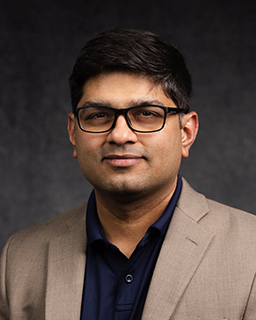
Speaker: Ashwin Renganathan, Pennsylvania State University
Presentation
Seminar Slide Deck (PDF-9.7MB)
Abstract
Modern day aerospace engineering decision-making involves high-fidelity physics-based computational models which can be queried within the decision-making loop on demand. Querying such “computer experiments”, incur a non-trivial computational cost, which increases with the level of fidelity in the underlying models. For instance, a realistic computational aerodynamic simulation of an aircraft can cost several thousands of CPU hours to compute—anything more than a few dozens of such simulations is prohibitive. Therefore, a central goal of aerospace decision-making is to optimally design computer experiments, to maximize the value of information extracted at minimal computational effort.
In this talk, we will address problems anchored in, what we coin, the “decision-making triad” which includes: surrogate modeling, uncertainty quantification (UQ), and numerical optimization/control. Specifically, using variants of a probabilistic surrogate model and a Bayesian decision theoretic framework, we will show that problems in the decision-making triad can be solved in a principled, theoretically sound and, yet (computational) cost-effective manner. We will show demonstrations on applications in computational aerodynamics.
Biography