Grid-Adaptation for Large Eddy Simulations: A Sequence of Ideas over 10+ Years
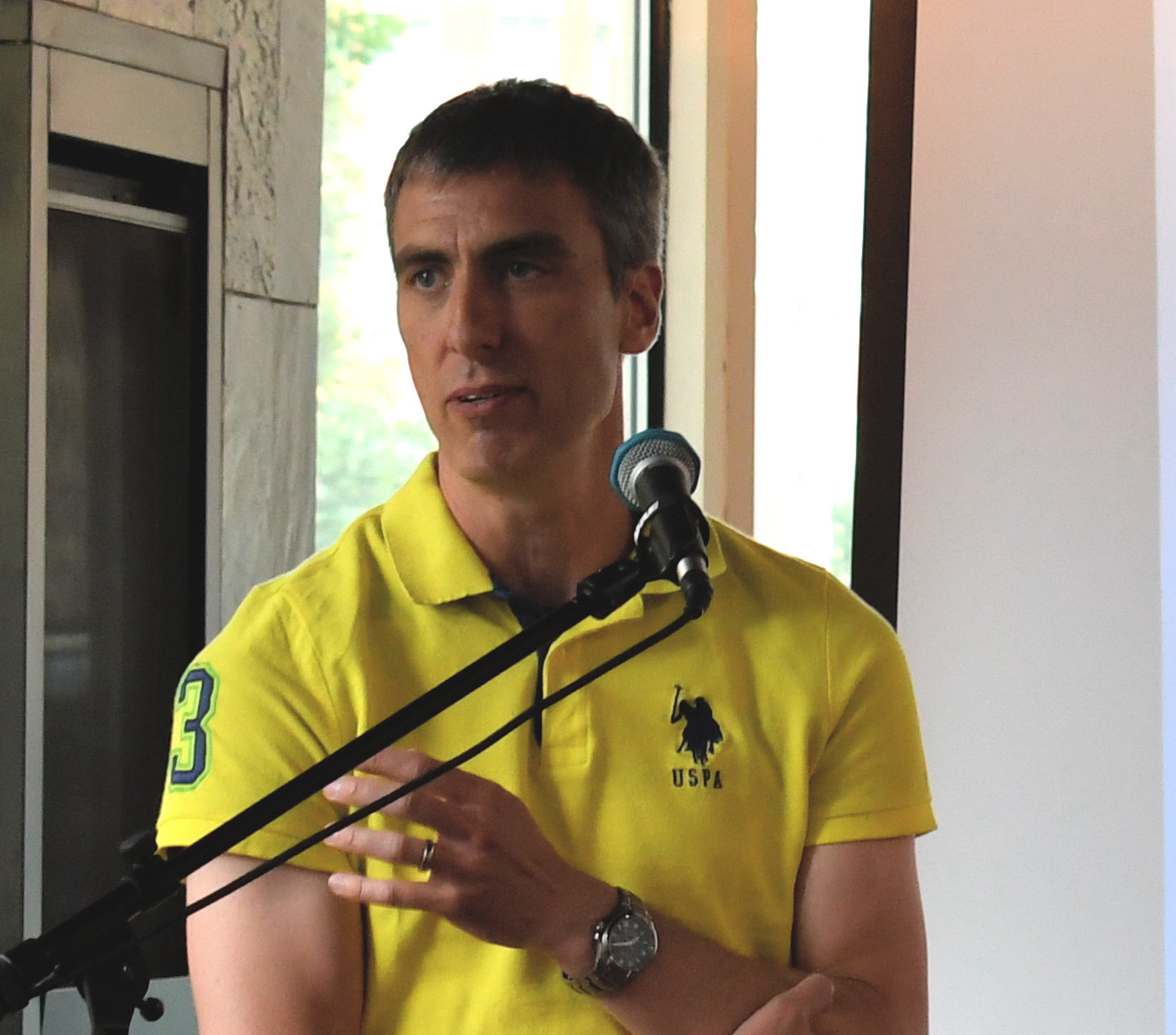
Speaker: Johan Larsson, University of Maryland, College Park
Presentation
Seminar Slide Deck (PDF-4.8MB)
Abstract
While grid-adaptation has reached a certain level of maturity in several areas of CFD, the application to turbulence-resolving simulations (most notably, large eddy simulations, or LES) is still in its infancy. The chaotic and broadband nature of the dynamics in an LES leads to 2 major challenges. First, the grid affects both the numerical and modeling error in LES, compared to only the numerical error in non-broadband problems. As a result, the estimation of the local error production cannot be purely mathematical but must also require physics-informed reasoning and assumptions. Secondly, the chaotic nature causes adjoints to diverge exponentially, which makes direct application of the adjoint-weighted residual method cumbersome.
The talk will discuss some progress made on this problem over the last 5-10 years in the PI's group, along with outstanding issues and ongoing/future work.
Biography