Solving Forward and Inverse Problems in High-Speed Boundary Layers Using Machine Learning
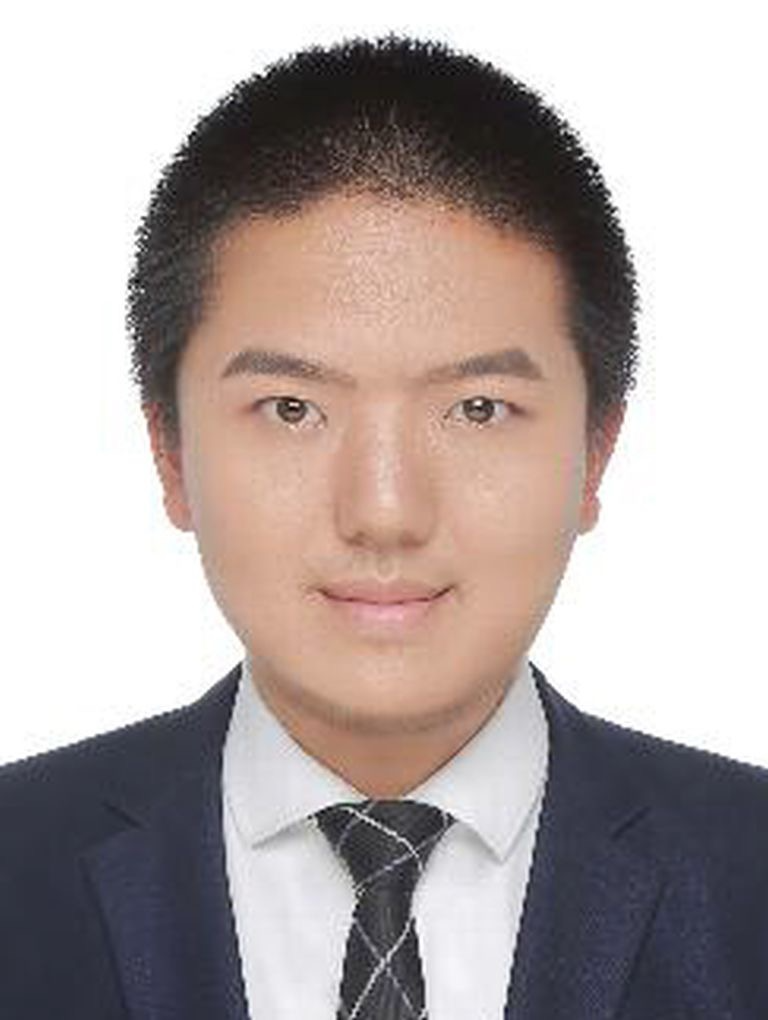
Speaker: Yue Hao, Johns Hopkins University
Presentation
Seminar Slide Deck (PDF-5.7MB)
Abstract
Fast and accurate prediction of instability wave evolution and laminar-to-turbulent transition in high-speed boundary layers remains numerically challenging. We show how DeepONets—deep neural network architectures designed to approximate operators—can be used to address (1) the forward problem: mapping an incoming perturbation to its corresponding downstream field accurately, and (2) the inverse problem: determining the original perturbation from downstream measurements.
Unlike conventional neural networks that learn functions, our model is a deep operator network (DeepONet) that learns operators—specifically, the mapping from upstream disturbances to the downstream flow. For the forward problem, a primary challenge in model development is the generation of training data, as instability wave evolution and transition are sensitive to various parameters, such as upstream disturbance frequency and energy, Mach number, and Reynolds number. Our strategy for sampling the training space aims to minimize the uncertainty of model predictions for a given number of training samples, or equivalently, the computational cost for data generation. We progressively identify regions of the input space where the Bayesian DeepONet output shows high uncertainty, perform DNS at these locations, and retrain the Bayesian DeepONet to improve model accuracy. The method is demonstrated and assessed for transition prediction in a high-speed, zero-pressure-gradient boundary layer over a flat plate.
For the inverse problem, we develop a global optimizer for data assimilation using a Bayesian approach coupled with DeepONets. Bayesian optimization minimizes the loss function by progressively incorporating measurements from new estimates. A Gaussian process regression (GPR) is adopted as an estimator of the loss function, for which we use an ensemble of DeepONets. Performance is assessed in the context of a high-speed boundary layer undergoing transition due to subharmonic resonance of planar and oblique instability waves. Using our combined Bayesian-DeepONet algorithm, the dominant frequency and phase difference between the 2D and 3D waves are estimated with satisfactory accuracy and efficiency.
Biography