Novel Sub-filter Closures for Compressible Flows
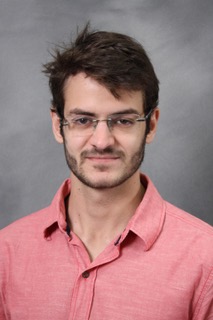
Speaker: Victor Sousa, Purdue University
Presentation
Seminar Slide Deck (PDF-139MB)
Abstract
Although hydrodynamic turbulence and shock formation have been treated separately in previous literature, both are characterized by an energy cascade from large to small scales due to nonlinear interactions. Therefore, the numerical simulation of both phenomena could be treated in a similar fashion, that is by solving the filtered compressible Navier-Stokes equations. In this talk, a new perspective on closures for filtered governing equations that allows for a unified framework for shock capturing and sub-filter turbulence modeling will be addressed. The concept is fully explored for high-order numerical implementations based on finite-differences and results will demonstrate the combined capability of simulating shocks and turbulence independently, as well as simultaneously. Following, an extension to discontinuous flux reconstructions methods will be analyzed with initial focus given to shock-dominated flows. Results for such numerical discretization scheme showcase a high degree of resolution power, achieving accurate results with a small number of degrees of freedom, and robustness, being able to capture shocks associated with the Burgers' equation and the 1D shock tube within a single cell with orders 120 and higher, for example. Ultimately, the application of the developed sub-filter closure to simulations of hypersonic boundary layer transition delay over porous walls will be discussed. The analysis of the results will show the dynamic capability of the proposed method, as it is able to accurately simulate the unstable dynamics of acoustic modes present in the boundary layer. Additionally, comparisons against experimental measurements performed at the High Enthalpy Shock Tunnel at Göttingen (HEG) with respect to the transition delay and frequency content of the pressure oscillations at the wall showing good agreement will be made.
Biography