Using the symmetry-based turbulence theory, we derive turbulent scaling laws in wall-bounded shear flows for arbitrarily high moments of the flow velocity U1. The key ingredients are the symmetries of classical mechanics, especially the scaling of space and time, and two statistical symmetries, which are not directly observed in Euler and Navier-Stokes equations. These symmetries are admitted by all complete theories of turbulence, i.e. the infinite hierarchy of moment and PDF equations and also by the famous Hopf functional equation. The symmetries provide a measure of intermittency and non-Gaussian behavior – properties that have been investigated for decades for turbulence and are now subject to a rigorous description. Based on the above, in the near-wall region the symmetry theory predicts a log-law for the mean velocity (n=1) and an algebraic law with the exponent w2 (n - 1) for moments n > 1. Hence, the exponent w2 of the 2nd moment determines the exponent of all higher moments. Most important, moments here always refer to the instantaneous velocities U and not to the fluctuations u’. For the core regions of both plane and round Poiseuille flows we find a deficit law for arbitrary moments n of algebraic type with a scaling exponent n (s - s1) + 2 s1 - s2. Hence, the moments of order one and two with its scaling exponents s1 and s2 determine all higher exponents. All new theoretical results are validated very well by a new plane Poiseuille flow DNS at Ret = 104 and by pipe flow data from the CICLoPE (Uni Bologna) and Superpipe (Princeton) flow experiments at Ret = 2 * 103 - 3.8 * 104.
Biography
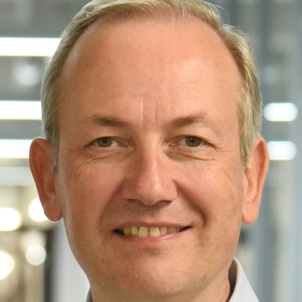
Martin Oberlack is Professor in the Department of Mechanical Engineering at the Technical University of Darmstadt and holder of the chair for fluid dynamics. He received both his Diploma (1988) and his Ph.D. (1994) from RWTH Aachen. Prof. Oberlack pioneered the use of Lie symmetry methods for the study of turbulence and modelling concepts and has written widely on this with a special focus on turbulent shear flows. His current interests include: Lie symmetries of turbulent flows, construction of conservation laws, hydrodynamic stability theory, Fokas unifying method for multi-phase problems, aerodynamic noise, visco-elastic flows, combustion, high-performance and parallel computing, Discontinuous Galerkin numerical methods with special focus on singular problems such as multi-phase flows and large scale direct numerical simulations of turbulence. He was and is actively involved in various editorial boards including Fluid Dynamic Research, Theoretical and Computational Fluid Dynamics and Continuum Mechanics and Thermodynamics. He is a Fellow of the American Physical Society for his pioneering use of symmetry methods for the study of turbulence and related fields and the derivation of new conservation laws in fluid dynamics.