How-To estimate drag with
"viscousDrag"
Estimating friction drag with $CART3D/bin/$CART3D_ARCH/viscousDrag
Introduction
The viscousDrag
module is found in $CART3D/bin/$CART3D_ARCH/viscousDrag
the module does a single pass a-posteriori drag estimate
based on the inviscid solution provided by flowCart (via
a *.triq file). This method of estimating the friction drag is
most accurate when there is only weak interaction between the
boundary-layer and the outer flow. The module solves the 2D
integral boundary layer equations along streamwise strips taking
the computed inviscid solution for boundary conditions at the
outer edge of the boundary-layer. The module includes an option
to use a flat-plate boundary layer profile instead of actually
driving it from the inviscid solution (useful for comparison).
Usage
   Usage: viscousDrag [ argument list ]
 Options:
          -- Runtime Options--
-v                  verbose mode ON
-flatPlate          Use flat plate boundary layer profile
-mem                Report memory usage (auto on with -v)
-i %s               Input  file name, default:<input.cntl>
-clic %s            Use CLiC file named (e.g. modelName.triq)
-scale %F           Number of feet per-unit-model length def:<1.0>
-version            Dump version info and exit
Sample files with additional
documentation

Here is a link to a
zip file containing an example running the viscousDrag module on
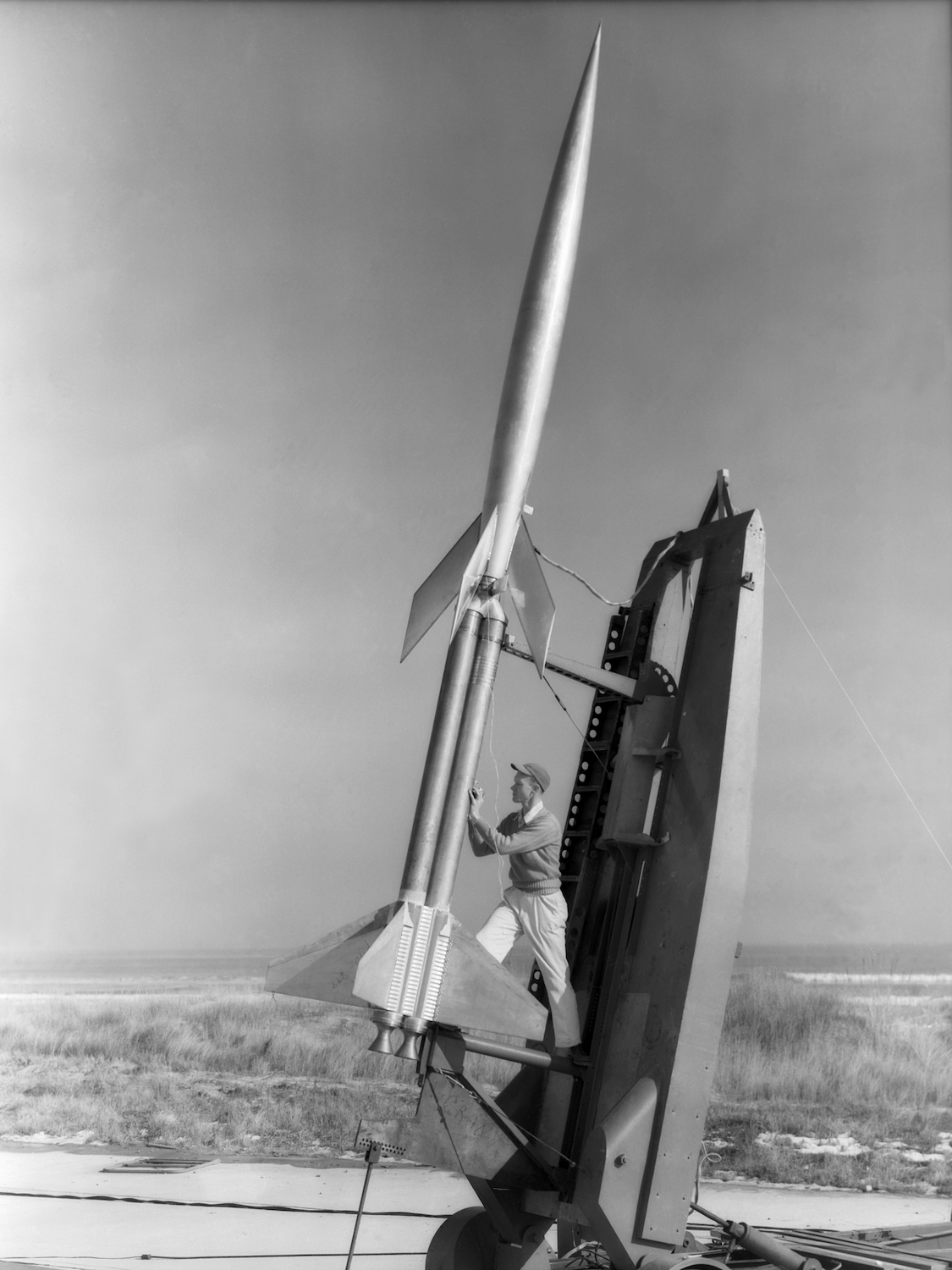
the RM-10 supersonic research mode. To run viscousDrag on this
example use something like
%
viscousDrag -clic rm10.i.triq
This runs viscousDrag using the data contained in
rm10.i.triq which has results from a Mach 1.2 run of flowCart
Files
References
See pages 8-10 of AIAA
Paper 2006-0652.
• Aftosmis, M.J., Berger, M.J., and Alonso, J.J.,
“Applications of a Cartesian Mesh Boundary-Layer Approach for
Complex Configurations,” AIAA Paper 2006-0652, Jan.
2006..
last update: Oct. 2016