
Simulating Parachute Dynamics for NASA Space Exploration Missions
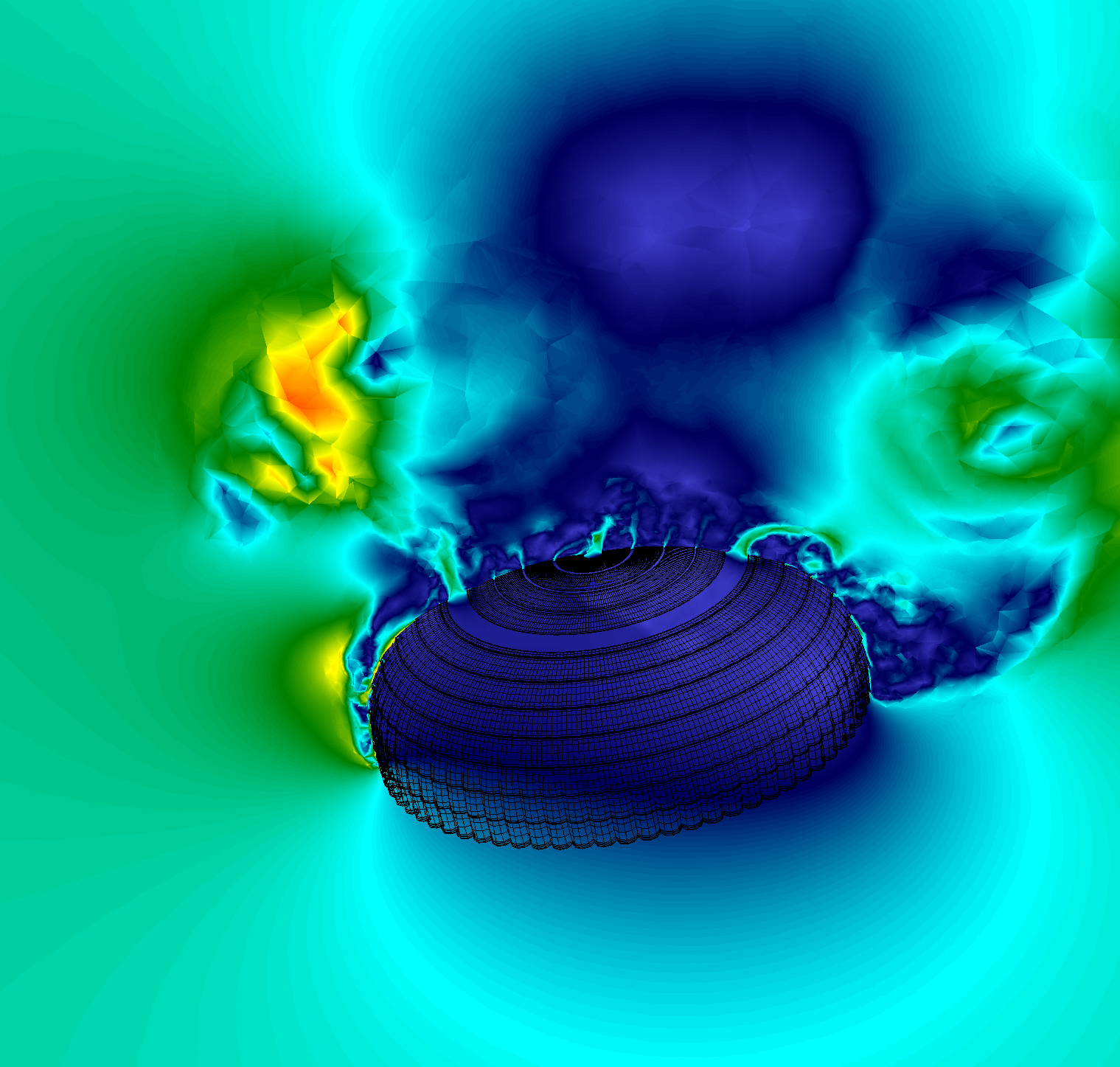
NASA uses parachute systems for returning astronauts back to Earth, and for many interplanetary robotic science missions. These systems are difficult to engineer due to their unique designs and extreme operating environments, making them one of the riskiest systems in any such mission. Parachutes aboard NASA's Orion spacecraft will be essential for the safe return of astronauts from successful space exploration missions. With support from the Orion project, the Space Technology Mission Directorate Game Changing Development Program, and NASA's Engineering & Safety Center, aerospace engineers in the NASA Advanced Supercomputing (NAS) Division are developing new, high-fidelity computational simulation tools to predict the complex dynamics of parachute clusters as they decelerate through the atmosphere. The result shown in this visualization is an example of the computed velocity on a slice through a deployed Orion parachute. Areas of high speed are colored red; low-speed areas are blue. Bright yellow-orange areas represent a high-vorticity structure that squeezes through one of the gaps in the parachute. The NAS team's computational work will augment existing flight and wind tunnel testing with detailed information provided by computational fluid dynamics simulations to ultimately improve the safety and reliability of NASA missions.
—Jill Dunbar, NASA/Ames
Image credit: Laslo Diosady, NASA/Ames
