Multi-Fidelity Aerodynamic Surrogate Modeling for Conceptual Design Using Graph Neural Networks
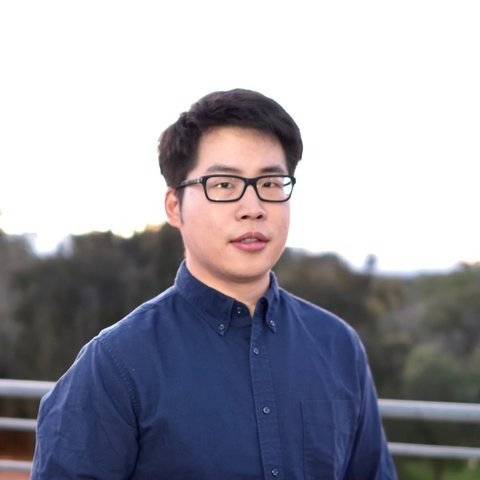
Speaker: Yiren Shen, Stanford University
Presentation
Seminar Slide Deck (PDF-5.8MB)
Abstract
Conceptual aircraft design requires major engineering decisions under limited information. In practice, low-fidelity aerodynamic tools are routinely used because higher-fidelity simulations are often unavailable or too expensive for early-stage design. This creates a fidelity-cost gap: the level of analysis fidelity needed for confident decision-making is not available at the stage with the greatest downstream impact. This challenge is especially important in supersonic transport design, where nonlinear aerodynamic effects make considerations such as low-speed stability difficult to assess using conventional conceptual design tools.
This talk presents MF-VortexNet, a multi-fidelity aerodynamic surrogate framework that uses graph neural networks to learn field-level corrections to low-fidelity pressure predictions from high-fidelity CFD data. By operating on pressure-field information, MF-VortexNet improves interpretability, enables the evaluation of arbitrary aerodynamic quantities, and supports generalization across a prescribed design space. The talk will also discuss an open-source multi-fidelity aerodynamic dataset, empirical scaling behavior of surrogate error with training data size, and integration of the framework into a conceptual design environment for stability-constrained shape optimization. Together, these results show that multi-fidelity machine learning offers a promising path toward improving confidence in early-stage aerodynamic design.
Biography