The Numerical Methods of John von Neumann and How They Led to Hypersonic CFD
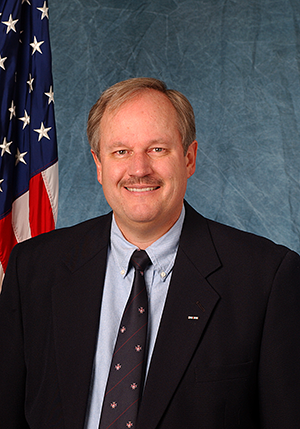
Speaker: Russell M. Cummings, Department of Aeronautics, US Air Force Academy
Presentation
Abstract
The history of computational fluid dynamics (CFD) has been intertwined with the history of numerical methods and calculation capabilities for decades. Those connections are perhaps no stronger than when looking at the development of numerical methods and calculation approaches that could simulate shock waves due to the discontinuity that exists across the shock. Some people have even conjectured that the simulation of the discontinuities across shock waves was perhaps the single most challenging numerical problem, one that would take decades for significant improvements to take place (including to the present day). How those advances came about, however, is a story that involves some of the greatest minds of the 20th century, who were trying to find methods to predict blast waves from atomic detonation, and the other aspects of creating an atomic weapon during World War II. First among those great minds, at least in terms of their contributions to CFD, is John von Neumann.
Biography