The availability of GPU hardware has initiated a transition from classical RANS-based methods to Scale-Resolving Simulation approaches in a wide range of industrial applications. A central target area is external aerodynamics, with a focus on aeronautics and automotive applications. The talk will lay out the strategy and the different elements with which Synopsys approaches these challenges using the Ansys suite of CFD solvers. The elements discussed will be the newly developed GPU solver and its HPC performance, the meshing strategies used for large problems sizes as well as the turbulence modeling related issues currently observed. Aspects of future research will be presented. Applications will be shown for building block cases, the DrivAer car model and the High-Lift workshop test cases.
Biography
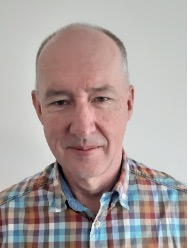
Florian Menter is a leading researcher in computational fluid dynamics (CFD) whose work has significantly advanced turbulence modeling for engineering simulations. He studied Mechanical Engineering at the University of Clausthal (1980–1985), completed his diploma thesis with honors at the von Karman Institute in Brussels in 1985, and earned his Ph.D. with honors from DLR Göttingen in 1990. From 1990 to 1995 he worked at NASA Ames Research Center in California, where he further developed turbulence modeling methods for aerospace applications. Since 1995 he has worked at Synopsys/ANSYS and related predecessor companies, where he currently holds the position of Synopsys Fellow. Dr. Menter is widely known for several key contributions to Reynolds-Averaged Navier–Stokes (RANS) turbulence modeling, particularly the widely used SST model, as well as the Generalized k-ω (GEKO) model, one-equation models (KE1E), and y+-insensitive wall treatment. He has also made major contributions to laminar–turbulent transition modeling through local correlation-based transition models such as the γ–Reθ two-equation model, and developed scale-resolving simulation approaches including Scale-Adaptive Simulation (SAS) and Stress-Blended Eddy Simulation (SBES) models. With a large body of highly cited publications, his work has had a major impact on industrial CFD and turbulence modeling worldwide.