Large-Eddy Simulations of Conjugate Heat Transfer over Iced Surfaces
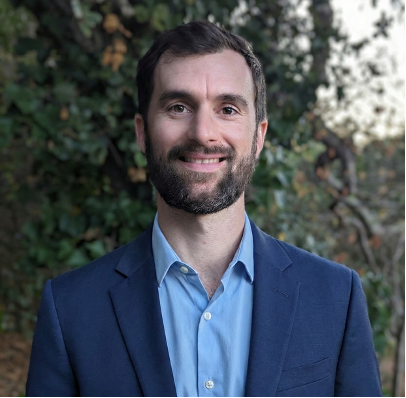
Speaker: Federico Zabaleta, Center for Turbulence Research, Stanford University
Presentation
Seminar Slide Deck (PDF-4.7MB)
Abstract
The accurate prediction of aircraft icing remains a critical challenge for flight safety and certification. While various ice accretion codes are currently in use, they frequently exhibit significant uncertainty, particularly in glaze ice conditions. A major contributor to this uncertainty is the lack of high-fidelity heat transfer predictions, which fundamentally govern the local freezing rates and resulting ice morphology. Traditional modeling approaches typically simplify the accretion physics, relying on isothermal wall assumptions and one-dimensional conduction models that fail to capture the complex thermodynamics of realistic ice roughness. This talk presents a high-fidelity, multi-physics framework that integrates wall-modeled large-eddy simulation (WMLES), Lagrangian droplet tracking, and unsteady conjugate heat transfer (CHT) to resolve coupled fluid-solid thermal interactions.
Our results reveal that solid thermal conduction within the ice layer is a critical, often overlooked mechanism that drives multi-dimensional heat transfer, fundamentally altering local heat flux distributions and even inducing heat flux reversal at roughness peaks. We further demonstrate that traditional isothermal wall assumptions significantly overpredict the Stanton number distribution by failing to account for temperature variations within roughness elements. Furthermore, the large roughness-to-boundary-layer ratios observed disrupt outer-layer similarity, rendering standard equivalent sand-grain models inadequate for predicting wall-shear stress and heat transfer in these regimes. By performing high-fidelity simulations of conjugate heat transfer over iced surfaces, we demonstrate that the effects of solid conduction are essential and must be accounted for in next-generation icing prediction models.
Biography