Cart3D is one of the most widely used high-performance aerodynamic simulation packages in NASA’s software catalog, with hundreds of users across NASA and the U.S. aerospace industry. This seminar provides an overview of the software’s design goals and core technologies, with an emphasis on automation, robustness, and solution accuracy. We present highlights and key advancements in the latest release and showcase applications from several NASA mission directorates, including low-boom supersonic aircraft design, launch vehicle development, and modeling long-distance blast propagation from asteroid entry and impact scenarios. The seminar will also outline current development efforts targeting atmospheric hypersonics, reentry simulations, and aerothermodynamics—both on Earth and in extraterrestrial environments.
Biography
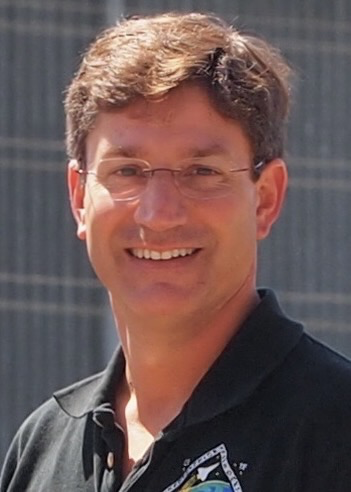
Michael J. Aftosmis is an Aerospace Engineer in the Advanced Supercomputing Division at NASA Ames Research Center in northern California. He has 35 years of experience developing and studying methods for computational fluid mechanics with a focus on innovative numerical methods and the application of advanced simulation techniques to the design and analysis of space launch vehicles and advanced aircraft. His specialties include Cartesian methods, mesh adaptation and adjoint methods for error-estimation and shape design. Michael leads NASA's Cart3D software development team, which supports a community of over 900 users across all NASA mission directorates, the DoD, DOE, academia, and industry and was previously recognized with NASA’s Software of the Year Award. He is a two-time recipient of NASA’s presidential-level Exceptional Engineering Achievement Medal for significant advancement of Aerospace Engineering and a NASA Silver snoopy for contributions made returning the Space Shuttle to flight after the Columbia accident. His work has also been recognized through numerous awards from NASA, the US Air Force, the AIAA and the Russian Federal Space Agency. Michael has served as an invited lecturer at the von Karman Institute, a visiting scientist at the DLR Design Institute for Aerodynamics and spent 10 years as an officer at the Air Force Research Laboratory. He has served as research advisor/external examiner for Ph.D candidates at numerous top universities in the US and Canada. Michael holds a S.M. in Aerospace Engineering from MIT, a B.S. from Syracuse University and is an Associate Fellow of the AIAA.