An Efficient Data-Driven Approach for Assessment and Selection of Reynolds-Stress-Equation Closure Models
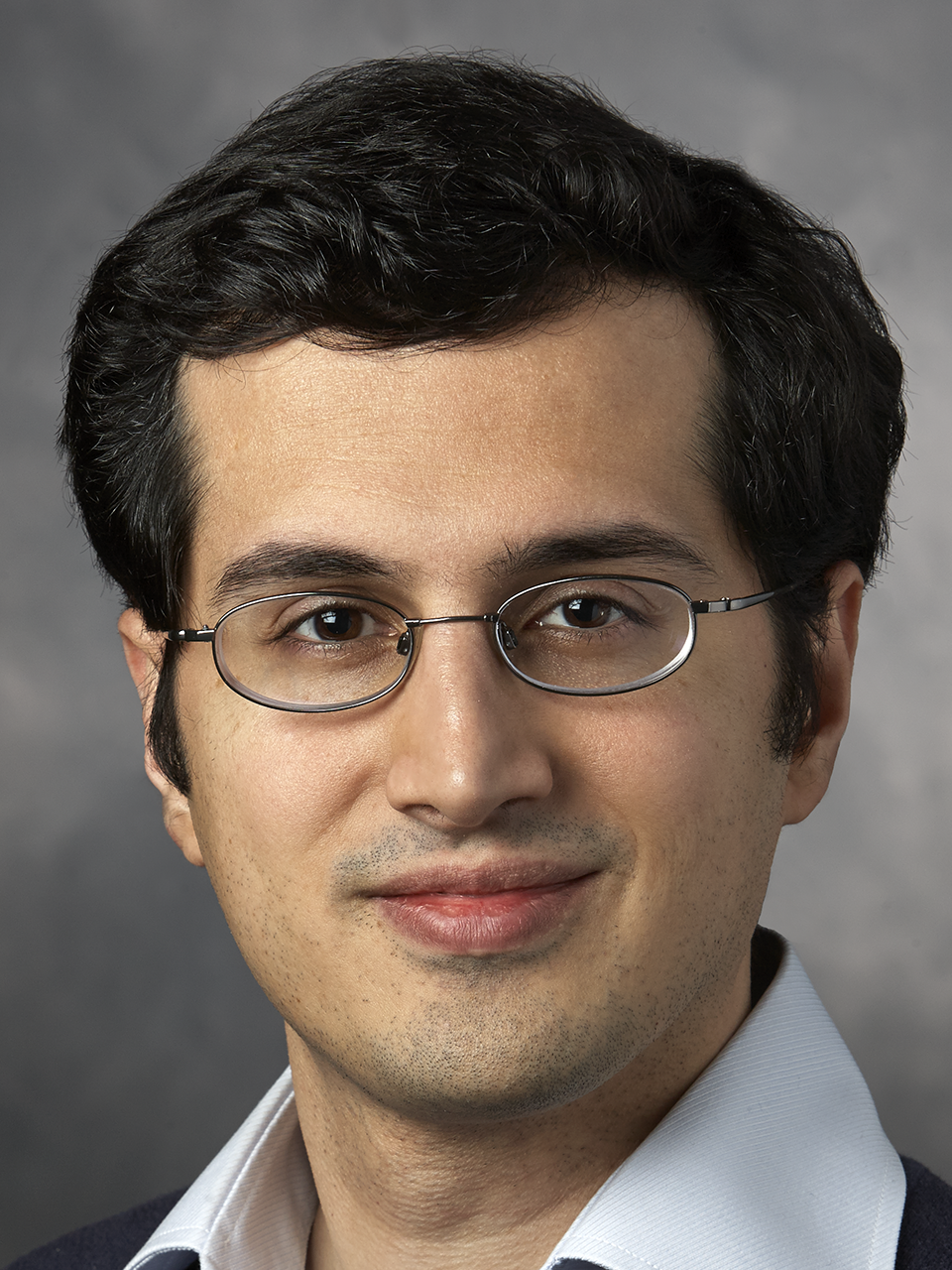
Speaker: Ali Mani, Department of Mechanical Engineering, Stanford University
Presentation
Seminar Slide Deck (PDF-2.7MB)
Abstract
Data-driven closure models often involve many adjustable parameters, typically by orders of magnitude more than traditional closure models. Such a large parameter space is needed to enable fitting of complex input-output dependencies regardless of the interpretability of the target closure models. A crucial challenge is therefore providing reference data that probes the sensitivities in the parameter space. As a result, most data-driven closure frameworks have access to substantially less data than needed to tune their closure models.
To address this need, we present an approach for systematic generation of reference data that can economically sample diverse regions in the parameter space. This approach is based on the Macroscopic Forcing Method and its extension for second moment closures in which volumetric forcing terms and boundary conditions are utilized to diversify the sampled flow conditions. Furthermore, we demonstrate a systematic selection of the forcing terms to generate data to probe specific subsets of closure parameters, thereby streamlining the model tuning process in a fashion tailored for the selected closure framework in our work, i.e., the Reynolds stress transport equation. In this presentation I show results for both demonstrative examples as well as practical models.
Biography