
Near-Wall Modeling for Rough-Wall Turbulent Boundary Layer Flows with Heat Transfer
Speaker: Xiang Yang, Department of Mechanical Engineering, Pennsylvania State University
Presentation
Seminar Slide Deck (PDF-3.9MB)
Abstract
This talk presents recent progress in near-wall modeling for rough-wall turbulent boundary layer flows with heat transfer, in the context of wall-modeled large-eddy simulation (WMLES). We begin by outlining best practices for WMLES, including the choice of the LES/wall-model (WM) matching location, the treatment of inputs to the wall model, and the effects of numerical schemes and grid resolution on predictions of both the skin friction coefficient and the heat transfer coefficient. Particular attention will be paid to the higher sensitivity of heat transfer predictions to these modeling choices in rough-wall scenarios. We then review the theoretical foundation of near-wall models—specifically, the velocity and temperature laws of the wall—and highlight the breakdown of Reynolds analogy in rough-wall flows and its implications for modeling strategies. Finally, we focus on the specification of the equivalent sandgrain roughness height, a key parameter in rough-wall near-wall modeling. We compare physics-based approaches, empirical algebraic correlations, and more recent data-driven methods. The talk emphasizes equilibrium-type models with a focus on rough-wall boundary layers with a well-defined logarithmic region. Brief remarks will also be made on the potential of non-equilibrium models.
Biography
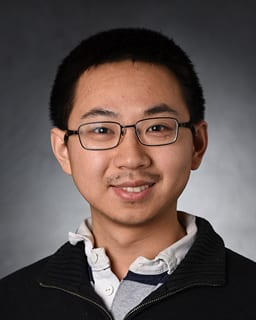
Yang was awarded the American Physical Society Division of Fluid Dynamics Best Thesis Award in 2017 and the Air Force Office of Scientific Research Young Investigator Award in 2022. His research focuses on high-fidelity simulations of turbulent flows, turbulence modeling that bridges physics and data, and the development of next-generation turbulence theories. He has authored or co-authored over 100 journal articles.