A physics-based moving-body unsteady Reynolds Averaged Navier-Stokes based method for predicting the onset of transonic buffet is described. Four test cases of varying complexity are chosen to evaluate the approach; an ONERA OAT15A supercritical airfoil, a NACA0012 airfoil, the NASA High-Speed Common Research Model (CRM-HS), and the Boeing SUGAR Phase V Transonic Truss Braced Wing (TTBW). These cases cover a wide range of configurations from airfoils, to a conventional aircraft design, to a more novel concept like the TTBW. These cases demonstrate various buffet instability mechanisms including low frequency airfoil buffet and moderate frequency swept buffet. Evaluation of the method includes a systematic study of the sensitivity of onset prediction to pitch rate, time-step, mesh resolution, and convective flux discretization. Results show varying levels of sensitivity to these metrics which will be presented at length. The talk will then be concluded with current best practices.
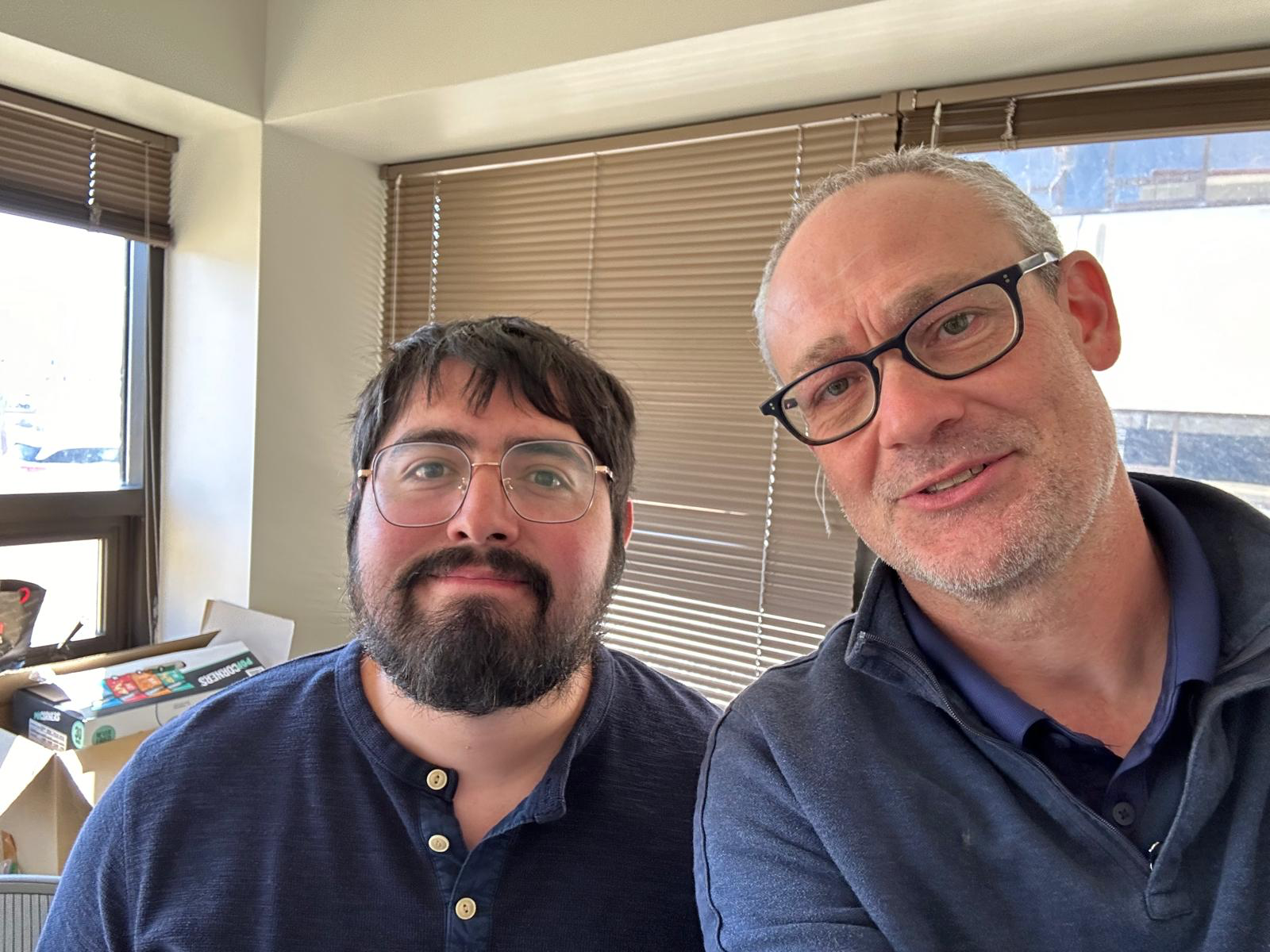
Jeffrey Housman (right) joined NASA's Computational Aerosciences Branch on September 25, 2011. He received his B.S. in Mathematics from Sonoma State University in 2000 and his Ph.D. in Applied Mathematics from U.C. Davis in 2007. He started at NASA Ames Research Center as a student researcher in 2001 and has been working in the Launch Ascent and Vehicle Aerodynamics (LAVA) group since its inception. Within LAVA his work has focused on development of the structured overset curvilinear grid solver and far-field aeroacoustic propagation/scattering modules. His research interests include scale-resolving simulations, hybrid RANS-LES models, and moving body simulations. Jeff has worked on a wide range of NASA mission related applications including launch vehicle takeoff and ascent analysis; aeroacoustic analysis of high-lift devices; noise generation from propulsion systems such as open rotors and jets; design and analysis of the X-57, X-59, and X-66; and stability analysis of the MSR-EEV and Dragonfly capsules. More recently he has been working on transonic buffet analysis of the Boeing SUGAR Transonic Trussed Braced Wing.
Daniel Maldonado (left) studied Aerospace Engineering at California Polytechnic State University, where he worked in the Prototype Vehicle Laboratory as the Lead Aerodynamicist for the Solar Powered vehicle and taught Applied CFD. He went on to work at SpaceX where he worked on aero-structural analysis as well as CAD and CFD tool automation. He has been working at NASA with the LAVA team since 2017 where he has been primarily working on activities supporting the Boeing SUGAR TTBW analysis while also supporting other efforts such as the X-57, X-59, and aircraft cabin airflow modeling.