A recently developed scheme at NASA Ames Research Center enables automation of structured overset surface mesh generation, a process that typically requires extensive user expertise and effort. The geometry is assumed to be available in the form of Boundary Representation (BREP) solids. Decomposition of the surface domain is accomplished by the creation of face, edge, and node meshes following the BREP topology of the geometry. The current status of the automation software will be briefly presented.
The automation scheme typically results in a much more fractured near-body grid system compared to manually generated meshes. Four test cases are used to investigate how the flow solution might be affected by such a fractured grid system. These consist of the Juncture Flow Experiment wing-body, the vertical-lift concept vehicle fuselages of the Lift+Cruise and the Side-By-Side Hybrid, and a Small Ducted Propeller. For each test case, the flow solution on the fractured automatically generated grid system is compared against the flow solution computed on a less fractured manually generated grid system of similar resolution. Queries into grid composition, integrated aerodynamic loads, solution convergence behavior, and computational efficiency and cost are examined.
Andrew Chuen is a NASA Pathways Intern in the Computational Aerosciences Branch at NASA Ames Research Center. He is also currently a Ph.D. student under the advisement of Professor Mohamed Hafez in the Mechanical and Aerospace Engineering Department at the University of California, Davis. His doctoral work focuses on development of algorithms for the automation of structured overset mesh generation for CFD applications. Prior to his doctoral studies, Andrew received his M.S. in 2019 and B.S. in 2017 in Mechanical and Aerospace engineering at UC Davis.
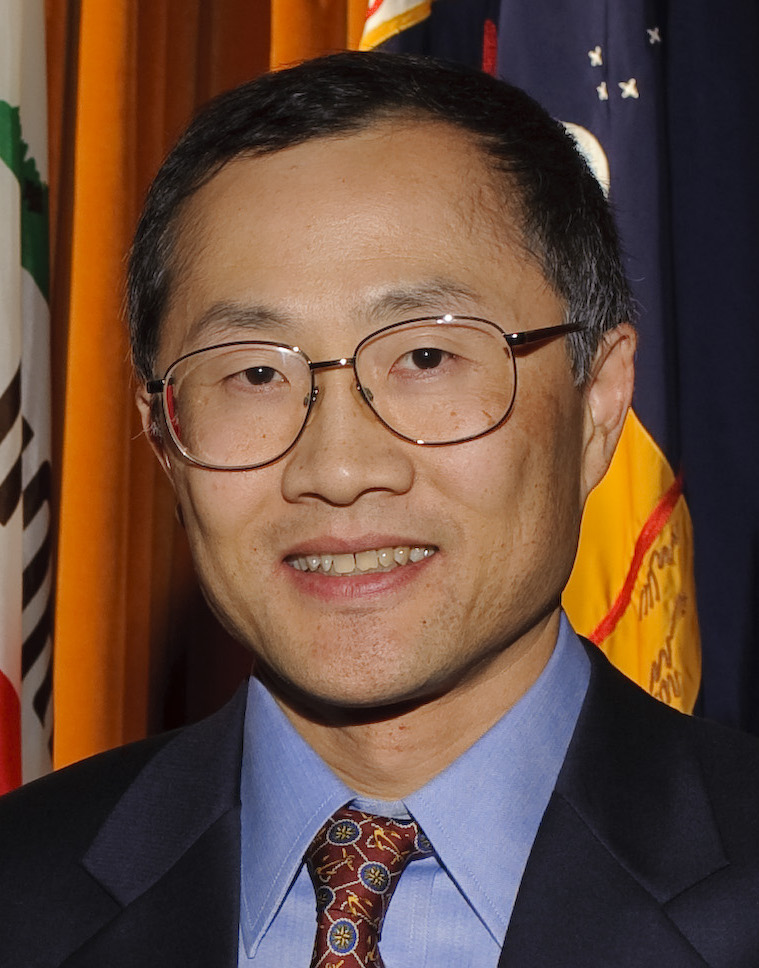
William M. Chan is a research scientist in the Computational Aerosciences Branch at NASA Ames Research Center. His primary interest is on the development of algorithm and software for pre-processing and post-processing of computational simulations using overset grids. He is the principal developer of many of the modules in the Chimera Grid Tools (CGT) software package which has been distributed to over 1,100 organizations in U.S. government laboratories, industry and universities. Since joining NASA Ames, he has supported numerous NASA projects. These include high fidelity CFD simulations of the Space Shuttle Launch Vehicle, multiple subsonic, supersonic, and vertical-lift vehicles, various turbopumps and liquid rocket sub-systems, and a variety of space launch vehicles from the Constellation and Space Launch Systems Programs. His work has been recognized through the NASA Exceptional Achievement and Exceptional Service Medals, and various Technology Transfer awards. William obtained his B.S. in Mathematics from Southampton University in the U.K., M.S. and Ph.D. from the Mechanical Engineering Department of Stanford University. He is an Associate Fellow of the AIAA.