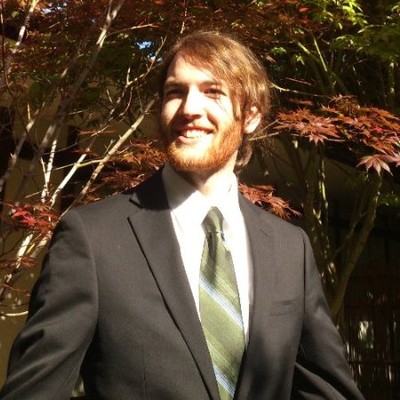
Enabling Supersonic Over-Land Flight Using Computational Modeling
Speaker: Scott Neuhoff, Computational Aerosciences Branch, NASA Advanced Supercomputing Division
Presentation
Abstract
NASA's QueSST mission is interested in exploring the potential of commercial, over-land supersonic flight, which has been banned since 1973 due to the noise intensity of the sonic booms that supersonic vehicles create. NASA has partnered with Lockheed Martin to design and construct an experimental aircraft, the X-59, that will shape the sonic boom to achieve a perceived loudness on the ground that is lower than 75dB. In this talk, we present new developments in the Launch Ascent and Vehicle Aerodynamics (LAVA) CFD solver framework which are tailored to the analysis of supersonic vehicles, like the X-59, and sonic boom propagation. Utilizing a high-order space marching method, adjoint-based grid adaptation, and robust database capabilities have enabled significant cost savings over traditional CFD methods for the same level of accuracy in perceived boom loudness. Example cases demonstrating the toolset are presented, along with comparisons to experimental wind tunnel data. These developments will enable LAVA to quickly and accurately provide simulation data to the project during X-59's first and subsequent flights in 2024 and beyond.
Funded by the NASA ARMD’s Commercial Supersonic Technology Project
Biography