On a New Length Scale for the Buffer Zone of Turbulent Flows
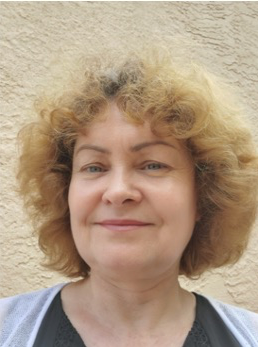
Speaker: Svetlana Poroseva, University of New Mexico
Presentation
Seminar Slide Deck (PDF-2.1MB)
Abstract
When comparing model and DNS profiles for fifth-order velocity moments in a turbulent channel flow under the strain and in a turbulent boundary layer over a flat plate, small discrepancies were found in the buffer zone of both flows, with the stain in the channel flow improving the agreement between the model and DNS profiles. The discrepancies were found to be associated with the magnitude of velocity fluctuations in the streamwise direction, the turbulence production by the shear in the transport equations of odd (third- and fifth-order) velocity moments, and with the balance errors in the DNS budgets of the odd velocity moments, all reaching their maximum in the flow buffer zone at close locations. The DNS data convergence was studies previously and found adequate (see, e.g., Poroseva et al. AIAA2016-3940), but the analysis also pointed towards potential issues with the grid resolution near a wall. On the other hand, the DNS data used in the study were generated following the standard practice, with the Kolmogorov length scale being as the reference. This scale comes from the theory of local isotropy along with the explicit warning that the theory is not applicable near the flow boundaries (Kolmogorov, 1941). Modern DNS focused on the analysis small-scaled coherent structures also recognize that the buffer zone has “life” of its own independent of the rest of the flow. In the presentation, a new length scale will be introduced to improve the quality of relevant statistics collected from DNS near walls. Details can be found in Poroseva & Murman, IJHFF, 2021.
Biography