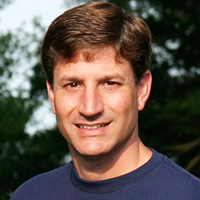
Speaker: Michael J. Aftosmis, NASA Ames Research Center
Presentation
Abstract
Simulation results for the First AIAA Sonic Boom Prediction Workshop are presented using an inviscid, embedded-boundary Cartesian mesh method. The method employs adjoint-based error estimation and adaptive meshing to automatically determine resolution requirements for each simulation. Results are presented for both mandatory and optional test cases. These include a low-boom body of revolution, a 69° delta wing model and a model of the Lockheed supersonic tri-jet with V-tail and flow-through nacelles. In addition to signature data, each example includes an assessment of mesh independence of the near- and mid-field pressure signatures. We also show mesh convergence of the adapta- tion functional and demonstrate that both the adjoint correction and remaining error are vanishing as the mesh is refined. Data provided include both the pressure signals required by the workshop and information on code performance in terms of processing time and memory usage. In addition, the discussion demonstrates useful techniques for prediction of extreme off-track pressure signatures and an adjoint-based technique for tracing features of the body pressure signature back to specific portions of the geometry and flow field.
Biography
Michael J. Aftosmis is an Aerospace Engineer in the Applied Modeling and Simulation Branch at Ames Research Center, Moffett Field, California. He has 25 years of experience developing and studying methods for computational fluid mechanics. His work has focused on the development and application of numerical methods for unstructured and Cartesian grids, computational geometry, mesh generation, adaptation and adjoint methods for error-estimation and shape design. Michael leads NASA's Cart3D software development team which supports a community of over 450 users across all NASA mission directorates, the DoD, DOE, academia and industry. He also served on the Debris Transport Team for Shuttle Return to Flight and was awarded the NASA Silver Snoopy in 2006 for his contributions. His work has been recognized through numerous NASA Achievement Awards, Research awards of the AIAA, and NASA’s Software of the Year in 2002. Michael has served as an invited lecturer at the von Karman Institute in Belgium, a visiting scientist at the DLR Design Institute for Aerodynamics and his background includes 10 years in the Air Force Research Laboratory. He has served as research advisor/external examiner for Ph.D candidates at MIT, Stanford University, University of Michigan, Georgia Tech and the University of Toronto. Michael holds a S.M. in Aerospace Engineering from MIT, a B.S. from Syracuse University and is an Associate Fellow of the AIAA.