Welcome to NASA@SC12
Overview
NASA joins the international supercomputing community at SC12 in Salt Lake City, November 10–16, to celebrate the latest science, engineering, and technology achievements enabled by its world-class high-end computing resources.
Our SC12 website features 34 demonstrations of computational projects across NASA's mission areas, along with a collection of spectacular images and videos related to exploration of the universe, design of next-generation space vehicles, solar weather and global climate research, aviation safety and efficiency, and much more.
Live from the SC12 showroom floor, scientists and engineers from around the country will be on hand to present their NASA accomplishments over the last year. In addition, we will showcase the following featured presentations in our new 10-foot-wide hyperwall theatre:
Designing Curiosity's Perfect Landing on Mars
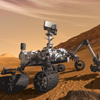 Millions of people around the world watched as the Mars Science Laboratory rover landed in Gale Crater on August 5, 2012 to begin its 687 Earth-day mission to determine whether Mars ever had an environment capable of supporting microbial life. Engineers combined their unique knowledge of entry, descent, and landing with the processing power of NASA supercomputers to orchestrate Curiosity's safe arrival on Mars. Read More...
Reaching Beyond Low Earth Orbit
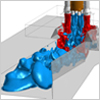 Design engineers are using supercomputers to simulate the rocket ignition and launch environment for NASA's new heavy-lift Space Launch System (SLS), which will be capable of launching large payloads and crew vehicles to exploration missions beyond Earth orbit. Simulations of acoustic waves that can damage the SLS and launch structure are being used to more fully understand the launch conditions and design a safer, more affordable, and sustainable vehicle. Read More...
Modeling the World in High Resolution
 In late October, Hurricane Sandy bore down on the U.S. East Coast with peak winds of 90 miles per hour and local rainfall in excess of 10 inches, causing extensive flooding and power outages. A NASA climate model resolving Hurricane Sandy and weather phenomena on a global scale offers a captivating preview of future simulation capabilities. Read More...
The Search Continues: Kepler's Quest for Habitable Earth-Sized Planets
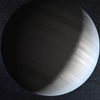 Since its launch in February 2010, the Kepler spacecraft has discovered more than 2,321 planet candidates circling 1,790 host stars in other Milky Way solar systems, including 77 confirmed planets–one of which orbits a double star that, in turn, is orbited by a second distant pair of stars. NASA's powerful Pleiades supercomputer is aiding the mission team in the hunt for these exoplanets. Read More...
Putting the "FUN" in Fundamental Aerodynamics Research
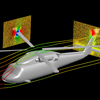 Scientists and engineers are developing and maturing computational tools and methods to enable formal, constrained optimization of complex aerospace design configurations. Using these tools to run simulations on NASA's massively parallel computers can greatly reduce the need for more costly alternatives, such as wind tunnel experiments or flight testing.
Read More...
Enjoy your exploration of our online SC12 exhibit!!
Visit Us at Booth #831
If you're at the conference, please visit us at Booth #831 to learn more about our exciting achievements supporting NASA missions.
